Horticulture: an Indian farmer's answer to the country's agricultural woes
Hydroponics and other futuristic technologies have exciting potential in agriculture, says Gyan Garg, a farmer in West Bengal and Rajasthan. But there is a lot more to be gained by mastering the basics. Field research from his farms, 2019.
Field research from July 2019, written up in early 2021. Lightly edited for this site in November 2026, with a postscript at the end.
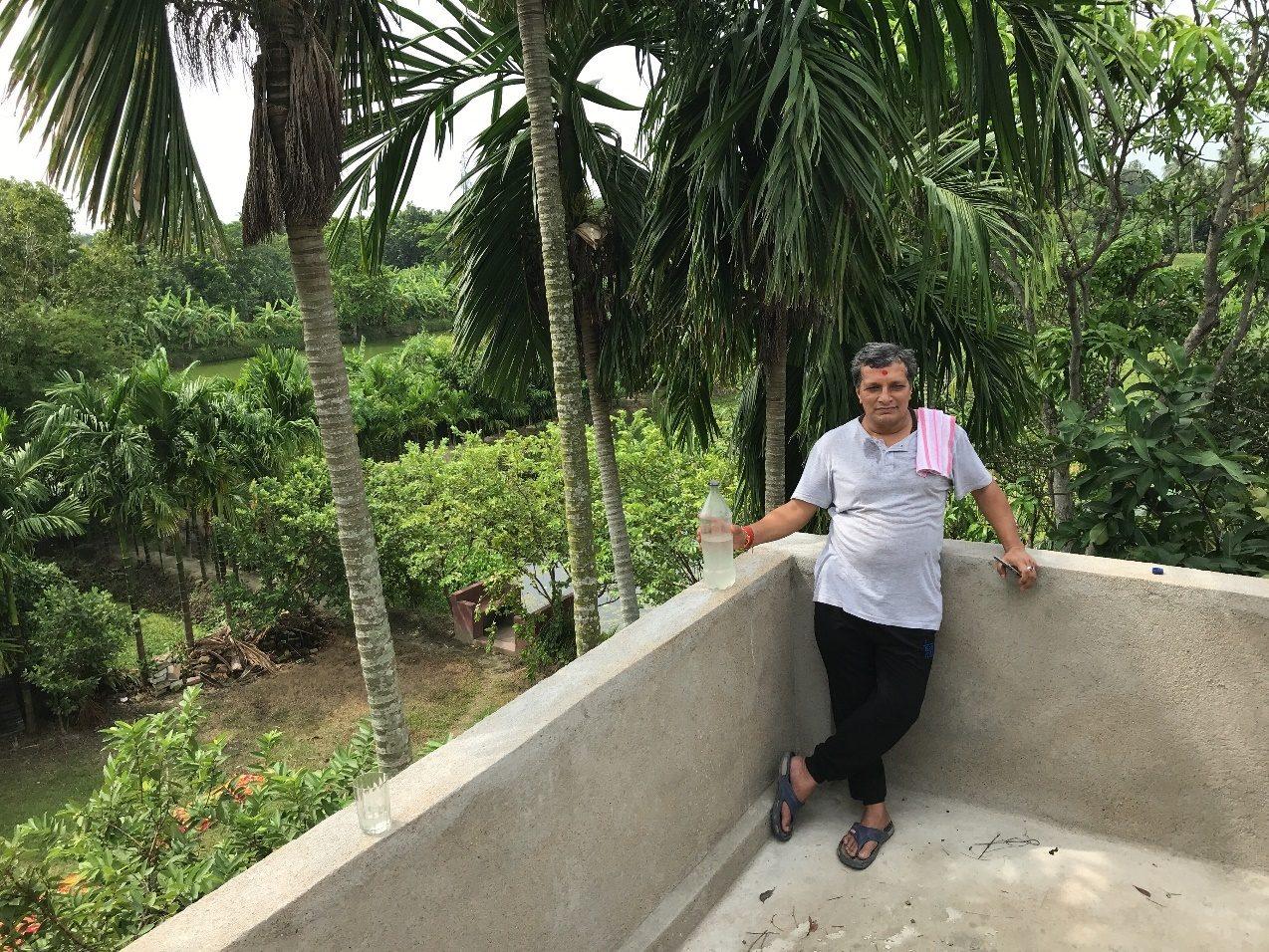
Hydroponics and other futuristic technologies have exciting potential in agriculture, says Gyan Garg, a farmer with sizeable plots of land in West Bengal and Rajasthan. But he maintains that there is a lot more to be gained by mastering the basics and finding solutions to optimise the use of millions of acres of the country's existing arable land.
In the final months of my tenure with MetLife's Innovation Lab in Singapore, I attended an exhibition showcasing some exciting hydroponics startups. This inspired me to dive into the agricultural landscape in India and explore commercial opportunities with new technologies. What I learned opened my eyes to much simpler solutions closer to home. Instituting the practices of advanced horticulture and integrated farming could vastly improve the annual income and financial stability of farmers across India, and do so sustainably.
While in India, I was lucky to come across Gyan Garg, a chartered accountant, farmer, and businessman. He invited me to stay with him to see his farms just outside Kolkata (West Bengal) and in Rajasthan, and explore the challenges and opportunities surrounding agriculture in the country firsthand. This article is written using insights gleaned primarily from Gyan's knowledge, philosophy, and perspectives from actively farming in India, and from what I saw and experienced while visiting his farms myself. The income figures in it are Gyan's own estimates, not measured results. Any other sources used are cited in-text.
Gyan's vision for agricultural India: addressing the largest challenges
Enabling the prosperous farmer
Approximately 50% of India's workforce depends on agriculture as a source of livelihood and income, contributing to 13.7% of the country's GDP (Dhawan, 2017). Even so, most farmers in India fall under the 'low income' category, with their livelihoods directly depending on the success of each year's crop.
The average monthly income of a farming household in India was INR 6,426 in 2012–13 and INR 10,218 in 2018–19, about INR 1.2 lakh a year (NSO, 2021). About half of these households are in debt (NSO, 2021).
Furthermore, India has 146 million farm holdings, with the average plot of farmland being 1.08 hectares (Agriculture Census, 2015–16). They are spread across vastly different geographies and climes growing thousands of varieties of crops, and many are so small that they are considered unviable to financially support a family using traditional farming practices.
Thus, any improvements in agricultural practices and yields have the potential to, and should actively aim to, benefit the hundreds of millions of farmers in India, most of whom are in the low-income category or in debt. However, it is also the sheer number of people in the system, at vastly different levels of income, educational qualifications, plot size, legal government support and more, which adds immense complexity and friction when looking to deploy any solutions at scale.
Enhancing water management
Water as a farming input is a critical resource, both to ensure food security for the nation and to ensure financial stability for the hundreds of millions who depend on agriculture as their primary source of income.
About half of India's cultivated land has no irrigation and depends on the monsoons (Economic Survey, 2022), while the rest is irrigated from groundwater and canals, much of which is also supported by the rains. However, the 16 years to 2017 saw 5 droughts, and meteorologists expect the frequency of droughts to increase between 2020 and 2049 due to changing climate patterns (Dhawan, 2017).
Excessive use of groundwater for irrigation, coupled with drought conditions and a lack of effective groundwater harvesting, has left large parts of India water stressed. Villages such as Sonwati in Maharashtra, which not long ago accessed groundwater at a depth of 20 feet, now have empty borewells running as deep as 800 feet (Dhawan, 2017).
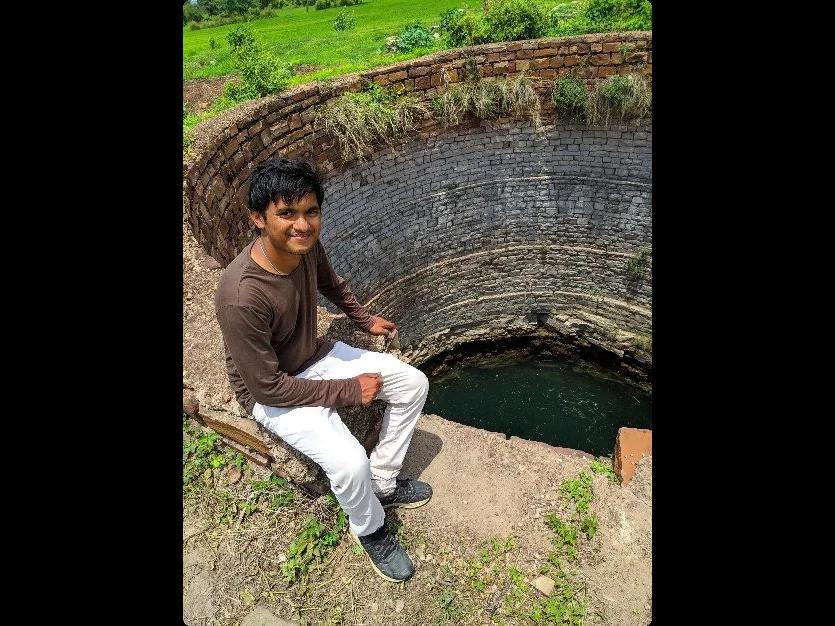
This well, on one of Gyan's farms in Rajasthan, has water at a depth of 60 feet. This is from a small aquifer close to the surface, well above the actual water table in the area, which is close to 600 feet deep. These aquifers are not reliable for keeping crops watered year to year, however, and searching for more of them is not an exact science. Digging too deep into one can cause the water to seep further into the ground and disperse.
Being water stressed, effective management of this resource is critical in India to ensure sufficient agricultural yields and stabilise farmer incomes.
Soil condition improvement
The quality of farmland across India has deteriorated because of an overuse of synthetic pesticides and a focus on profitability over sustainability.
To put it in simpler terms, Gyan describes farming as a game to minimise costs against moves the environment makes. How much of the pesticide will be good enough to kill the weeds that have started to grow? How much more would it cost to get the right amount of pesticide urgently today vs. in two days? How much would labour cost to pull the weeds out instead? What is the best alternative action? For whatever option we choose, what will be our estimated loss in produce? Based on the weather forecast, what is the best possible day to plant seeds? How much fertiliser will we need to have on hand?
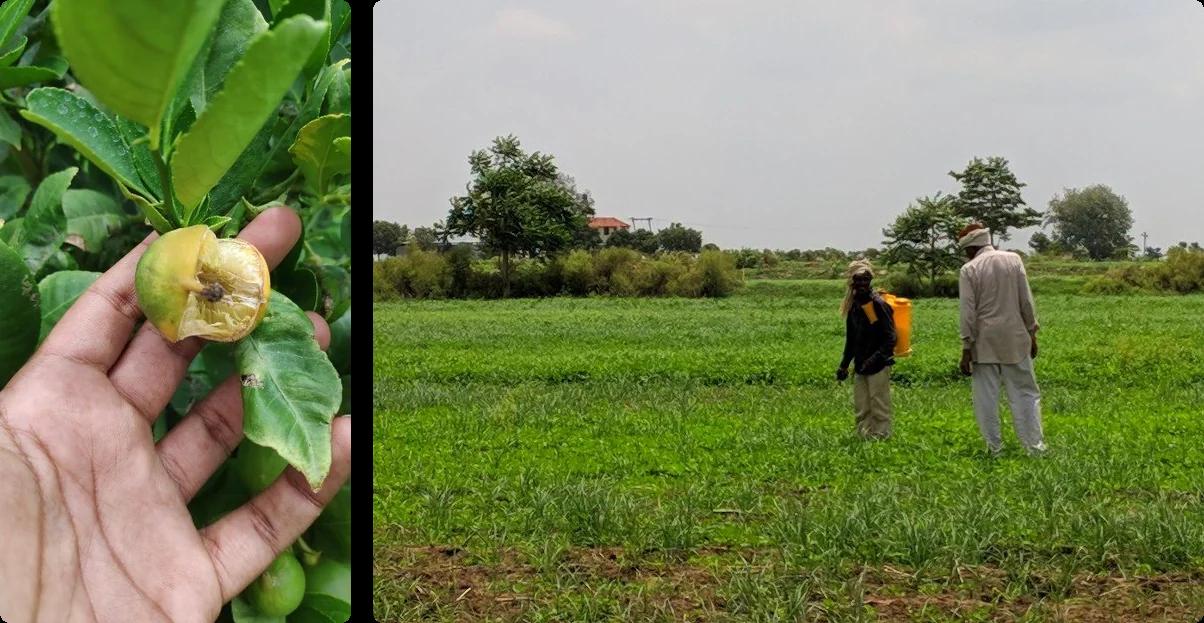
The downside is that, many times, chemical fertilisers and pesticides are today's solution to the challenges created by the elements. Over time, this degrades soil quality, making the land less productive (Ge et al., 2018). These chemicals can also seep into rivers and groundwater, further deteriorating the quality of this already precious and limited resource (Thakur, 2019).
Slashing and burning is another technique practised in parts of India to clear fields for cultivation. But in addition to destroying forest cover, these fields are only maximally productive for 2–4 years, after which crop yields decrease and weeds become more prevalent (Gay-des-Combes et al., 2017).
While the total quantity of cultivated land in India is substantial, the average plot size owned by a farming family is not, as mentioned above. Soil degradation has serious ramifications for each such family's yearly income, and over time can impact national yields.
Other challenges, and out of scope
The above serves as a non-comprehensive introduction to some of the biggest challenges facing farming in India.
However, it is important to acknowledge that agriculture in its entirety is part of a much bigger and more complicated system, including supply chain and logistics, distribution, staffing, land ownership, warehousing, chemical manufacturing, processing, export and import, and more. When I wrote this in early 2021, the focus in India was on farmers protesting in New Delhi against new laws to liberalise rules around the sale, storage, and pricing of produce (Biswas, 2021). The laws were repealed in November 2021.
As this article focuses purely on the actual farming and some directly associated activities, it does not explore the rest of the agricultural system and its challenges in as much depth.
Horticulture and other simple answers to India's agricultural challenges
Gyan's main philosophy is simple: optimise the use of agricultural space to optimise production. There are three main ways to accomplish this.
- Multi-cropping: planting a wider variety of crops at a higher density.
- Integrated farming: taking up practices such as animal husbandry.
- Non-traditional spaces: using them effectively.
Multi-cropping: using arable land to its fullest potential
Across from Gyan's farm just outside of Kolkata is a plot which practises farming traditionally. In it, we see a main paddy field which is planted only once (or twice) a year. It is surrounded by a raised periphery which keeps the field flooded when planted. These are the types of practices which see farmers earn the average household income mentioned above.
The raised periphery, often left bare, is prime land for farming. The two photos below show the difference between the traditional plot and how Gyan Garg optimises this space.
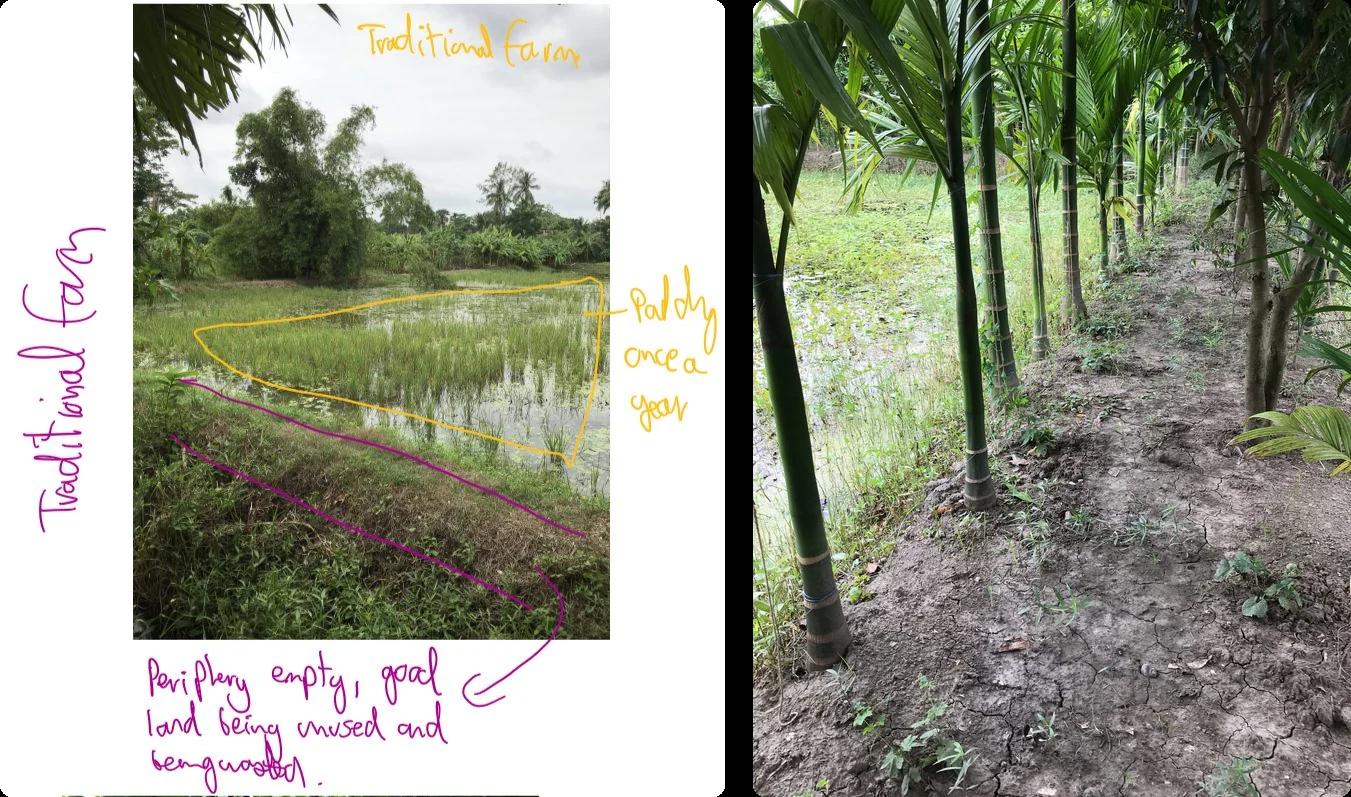
The edges of the raised periphery, on both sides, are host to coconut and betelnut trees, which can grow relatively close to each other. The trees in the middle, which are spaced further apart from each other, are different varieties of mangoes which fruit at slightly different times. Additionally, the space in between the trees is used to plant vegetables such as bitter gourd. In a space of less than 1 hectare which includes his paddy field, Gyan has over 200 betelnut trees and over 100 mango trees.
Where others use the periphery simply to keep water inside paddy fields, Gyan has converted it into a highly efficient, profit-generating strip of land using the practice of multi-cropping.
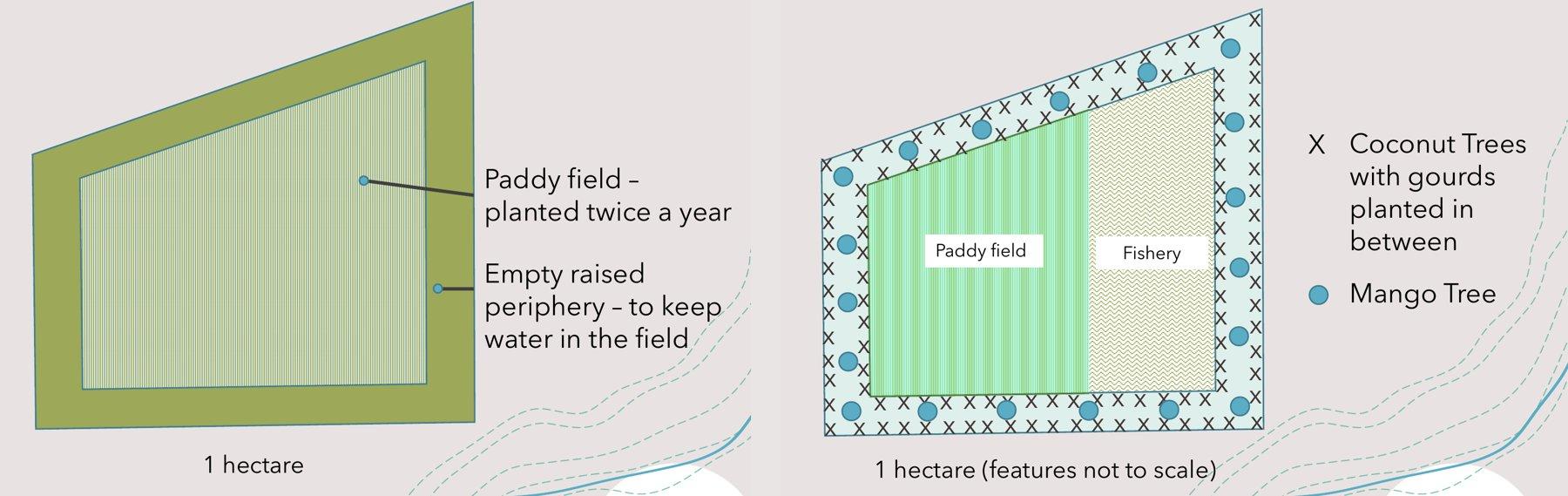
Where most farmers earn income once or twice a year by farming paddy fields or a single produce, Gyan uses space efficiently to farm a paddy crop, fruit, vegetables, nuts, medicinal herbs and more to ensure seasonal income. Multi-cropping alleviates pressure on the farmer and increases resilience, as one ruined paddy crop after a drought does not equate to financial ruin.
In more water-stressed regions such as Rajasthan, similar principles can be applied with crops better suited to the climate. Take the field below as an example. In a field of urad dal and chana dal (two types of lentils), Gyan has planted orange trees, which increase the total productivity of the land without needing significantly more water than the field already uses, and with extra labour required only during picking.
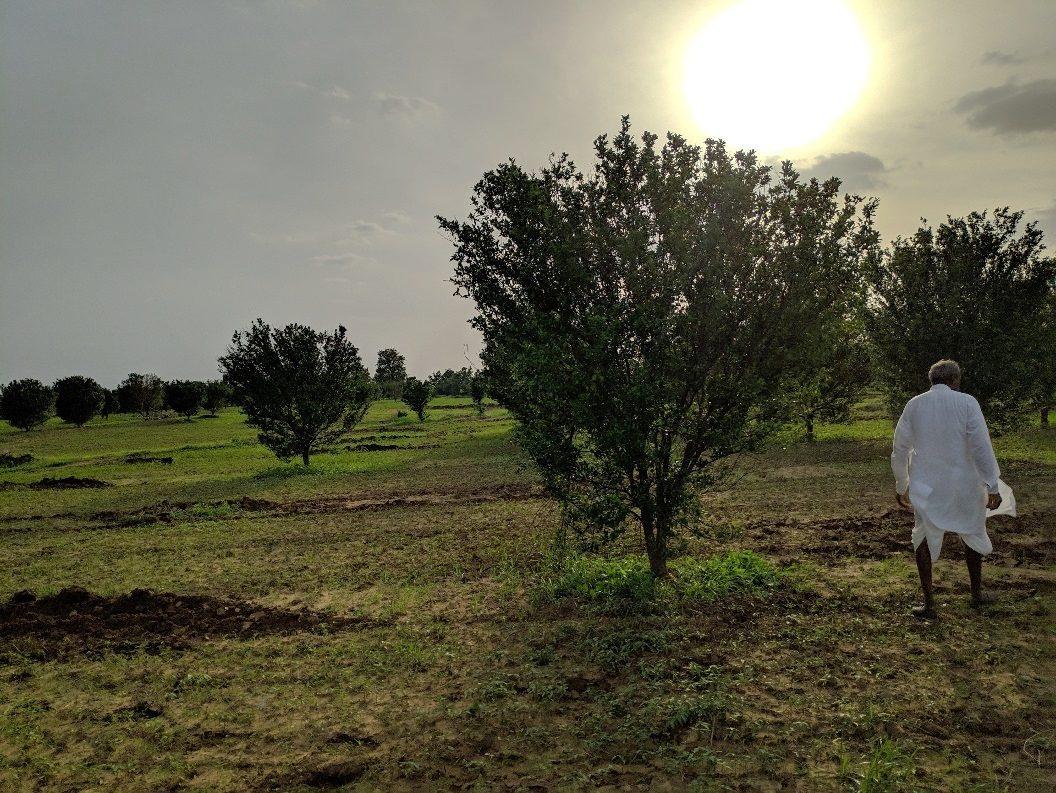
Gyan estimates an average farming family could earn INR 5 to 10 lakh (USD 6,800 to 13,700) a year following these principles. The low end corresponds to farming families in places like Andhra Pradesh, with infertile soil and water scarcity, and the high end to farming families in places like West Bengal, which are well suited for growing crops. By his estimate, that is four to eight times what the average farming household earned in 2018–19. It is his estimate from his own farms, not a measured result, and it deserves testing.
Integrated farming: animal husbandry and more
Gyan believes an easy way for farmers to double their income is by expanding the types of farming they practise. For example, an average farmer planting crops will be able to double their income by practising animal husbandry or starting a fishery.
The traditional paddy field pictured above yields crops once or twice a year. Gyan has divided half of his field into a small fishery which can operate year-round, and rotates paddy crops in the other half of the field, generating sustained income from this piece of land. This is possible in regions such as West Bengal which are not water stressed.
Beyond starting a fishery, obtaining two cows would provide a farming family with milk they will be able to consume and sell. Additionally, the cows' manure can be used to generate biogas for energy and cooking fuel. The slurry left from this process is one of the only sustainable and environmentally friendly ways of rejuvenating land with the necessary nutrients for each planting season. In addition to increasing income sources, a couple of cows lessen a farmer's need to purchase and use chemical fertilisers, decreasing their overall expenditure and improving soil health over time in the process.
Farming in non-traditional spaces
Places like boundary walls, the walls of farmhouses or huts, and small room-sized plots of land can be used to generate substantial income through farming.
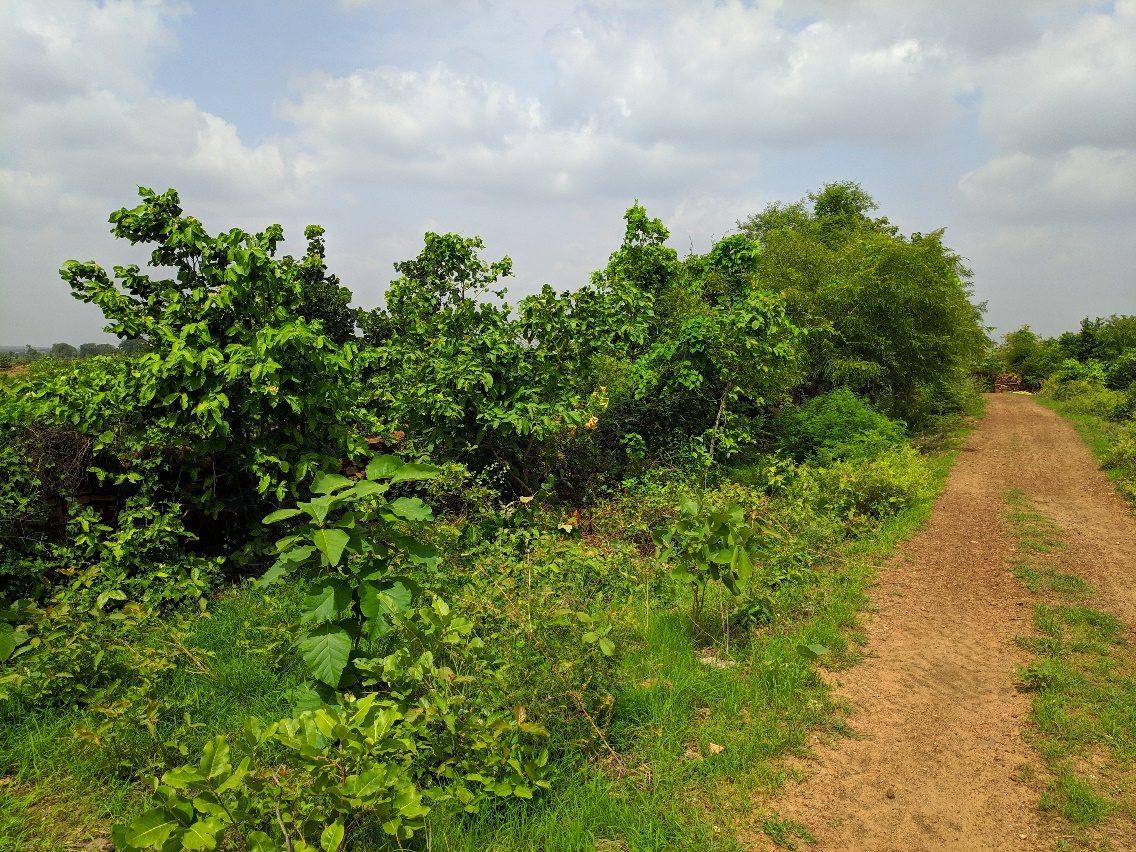
Gyan has a warehouse for storing chemicals and other farming-related equipment such as bleach, lactose, and pallets. This facility is surrounded by a wall. By setting up ropes along this boundary wall, about 15 metres long, he can plant giloy, a medicinal vine which, once planted and germinated, will grow of its own accord without any additional water or maintenance in Kolkata's climate. It turns a location which would otherwise be left empty or piled with detritus into a source of income.
This space can be used even more effectively: the corners can be home to neem, bel, or other trees.
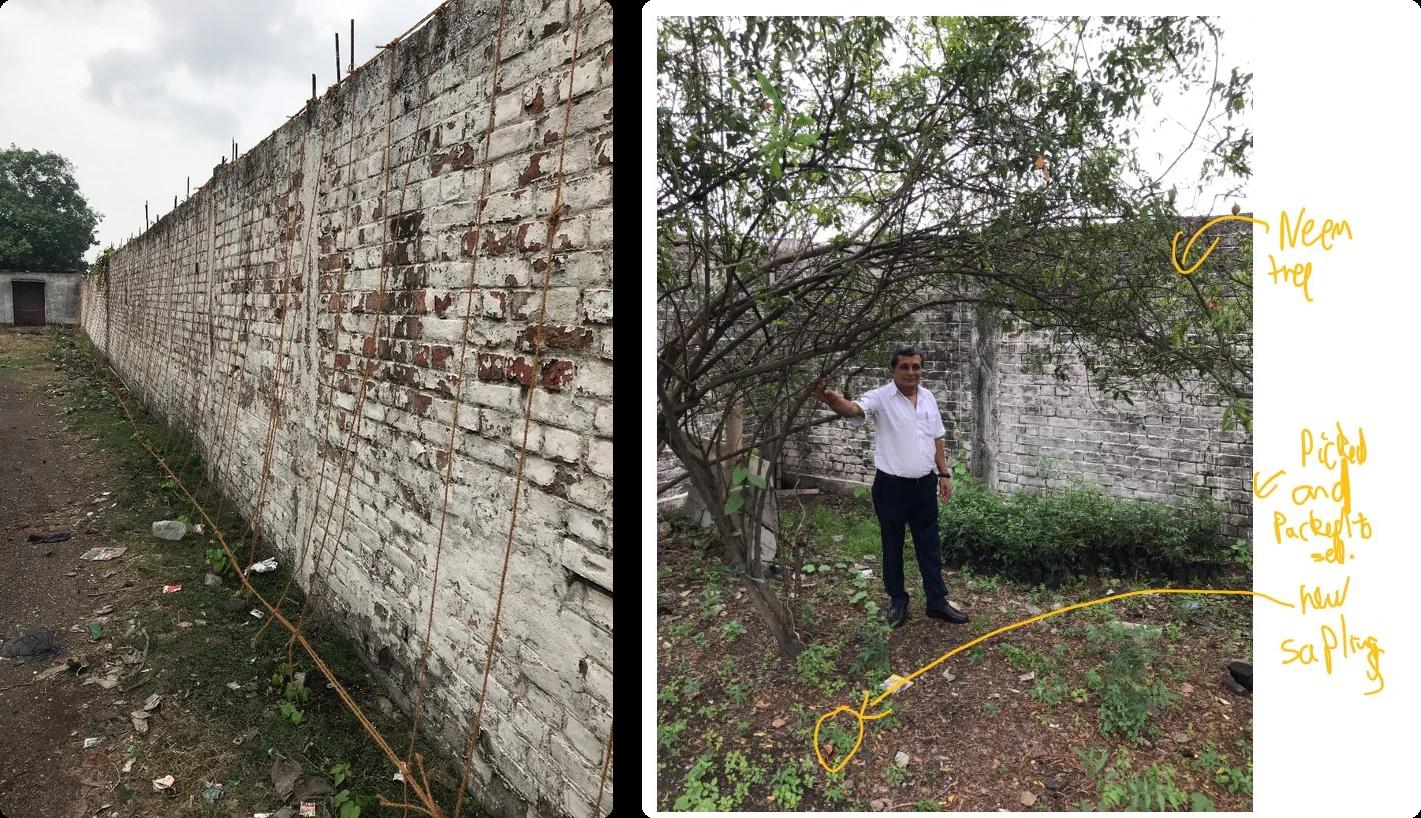
A single neem tree as pictured can yield INR 1,000 per year, as saplings (which fall from the tree and grow naturally), leaves, and seeds can be harvested and sold. Practising multiple cropping in non-traditional spaces, using plants endemic to a region, means that after 1–2 years of watering and care the plants grow roots deep enough to be self-sustaining, except in cases of exigency (disease etc.).
The above showcases how a non-traditional space such as a warehouse yard can be farmed in a more passive manner to generate income sustainably. However, non-traditional spaces closer to home can also be actively managed to generate more income.
Gyan Garg's private residence in Kolkata has a walled-in garden with an area of approximately 500 square feet. He uses this space to plant saplings of multiple crops, lets them grow, and sends these plants to his bigger farm for planting or sells them to other farmers.
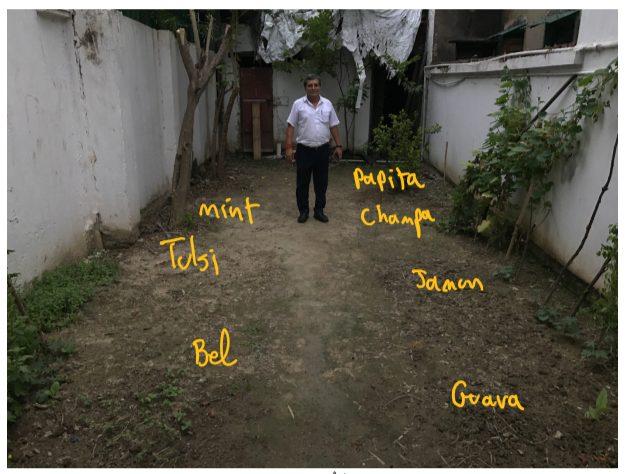
In this small square of managed land, Gyan can earn INR 1 lakh in a span of two months. That is close to what the average farming household in India earned in a whole year in 2018–19.
Challenges to adopting these best practices
It is not always easy for farmers to start multi-cropping, integrated farming, and other such initiatives. The reason Gyan can plant so many varieties is that he is a larger farmer, connected directly to purchasers across industries such as medicine and food, and able to organise the necessary supply chain and logistics.
Smaller farmers simply do not have the scale and connections to set this up, and their comparatively low income makes it hard for them to front the investment required to start this type of multi-crop farming. Depending on the region and the flora planted, there can also be a 2–7 year lag before they earn substantive revenue.
There are additional challenges around education and behaviour change. Small farmers do not necessarily have comprehensive knowledge of the variety of profitable crops available, or of opportunities and demand in the market. Additionally, in Gyan's experience, multi-crop farming and animal husbandry require more active engagement year-round than planting just one or two crop cycles a year, and may need additional farm hands. For a family where one bad season means more debt, caution about such a change is understandable.
But if successful, these shifts would enable Gyan's vision of the Prosperous Farmer, with the potential, by his estimate, of increasing average farming household income several times over if instituted well at scale. Using local plants would further help with water management, and using fertilising slurry from the family's own cows would even serve to manage soil health over time. However, large barriers and challenges remain.
Efficiencies enabled by modern technologies, and barriers to uptake
The water table in parts of Rajasthan is deeper than 600 feet, and the region is severely water stressed. Advanced irrigation and climate control technologies greatly help with water management and crop production in this scenario.
One of Gyan's farms in Rajasthan uses a polyhouse, a greenhouse, to grow cucumbers. This initiative is all about maximising efficiency and promoting self-sufficiency.
Where it would take 10 acres of open field to grow 30 metric tonnes of cucumber, the polyhouse can grow the same quantity in a mere 1 acre, using far less water and energy.
Solar panels power the farm's borewell, which pumps up groundwater and distributes it throughout the farm and greenhouse without any reliance on the external power grid. This water is used inside the polyhouse by foggers attached to the ceiling to maintain the right temperature and humidity, and by advanced drip irrigation to keep the cucumbers watered.
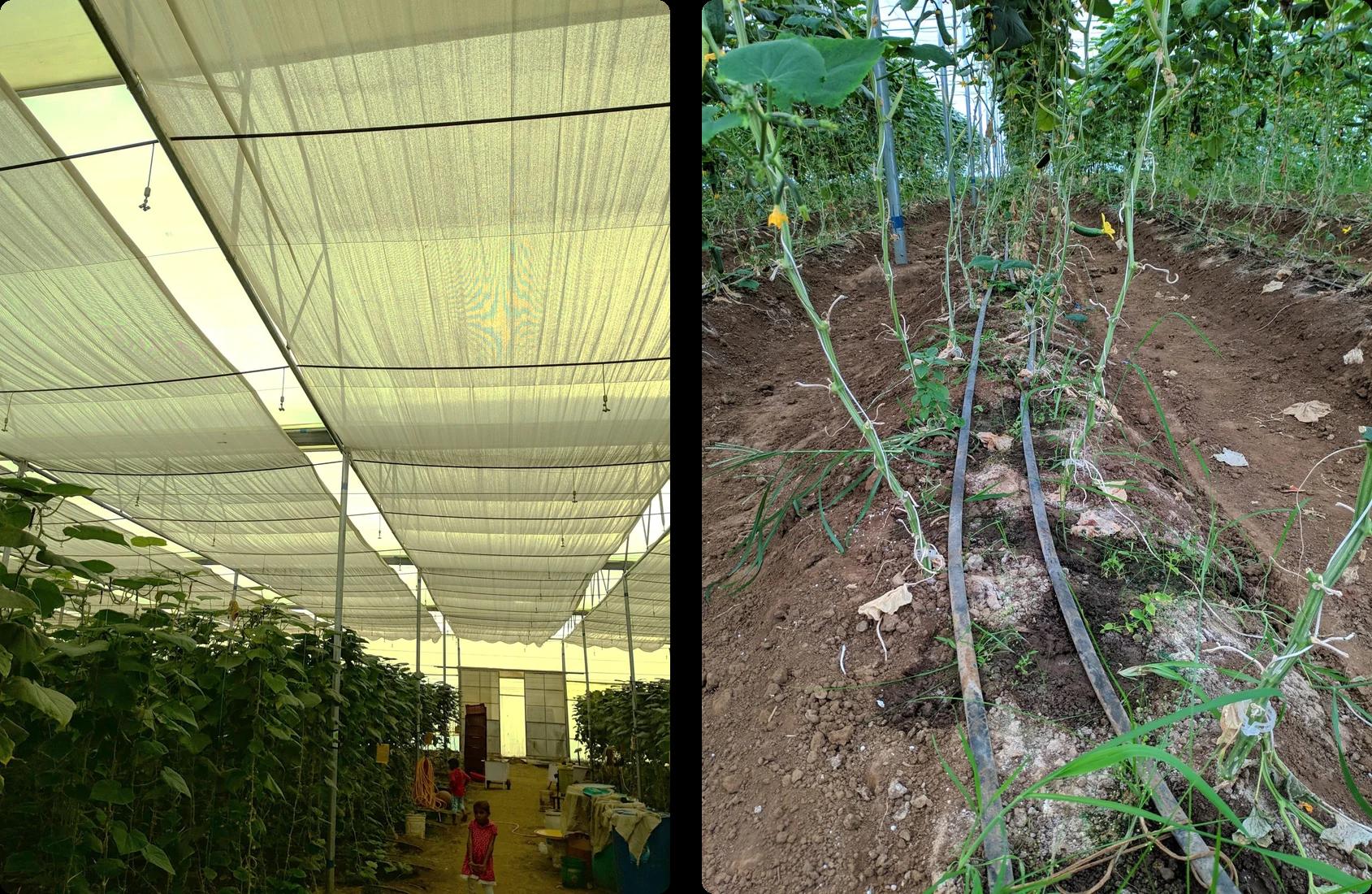
The humid conditions inside the greenhouse are also ripe for growing microbes, natural pesticides that keep fungus away from the cucumber plants. These microbes are mixed into the water supply which feeds the irrigation system in the polyhouse and the external farm.
Given that greenhouses can accomplish so much in a space one acre large, why aren't more farmers in India using them? The biggest reason is the size of the upfront cost: setting up the polyhouse required INR 34 lakh (~USD 46,500). Even though the government subsidises up to two-thirds of the total price, the initial investment is simply too much for the average farming family, which is already cash-strapped and, in about half of cases, in debt (NSO, 2021). Additionally, shortages of funds due to the COVID-19 outbreak caused state governments such as Bihar's to cut their subsidies for farming implements, putting an even higher financial burden and risk on farmers (Rani, 2020).
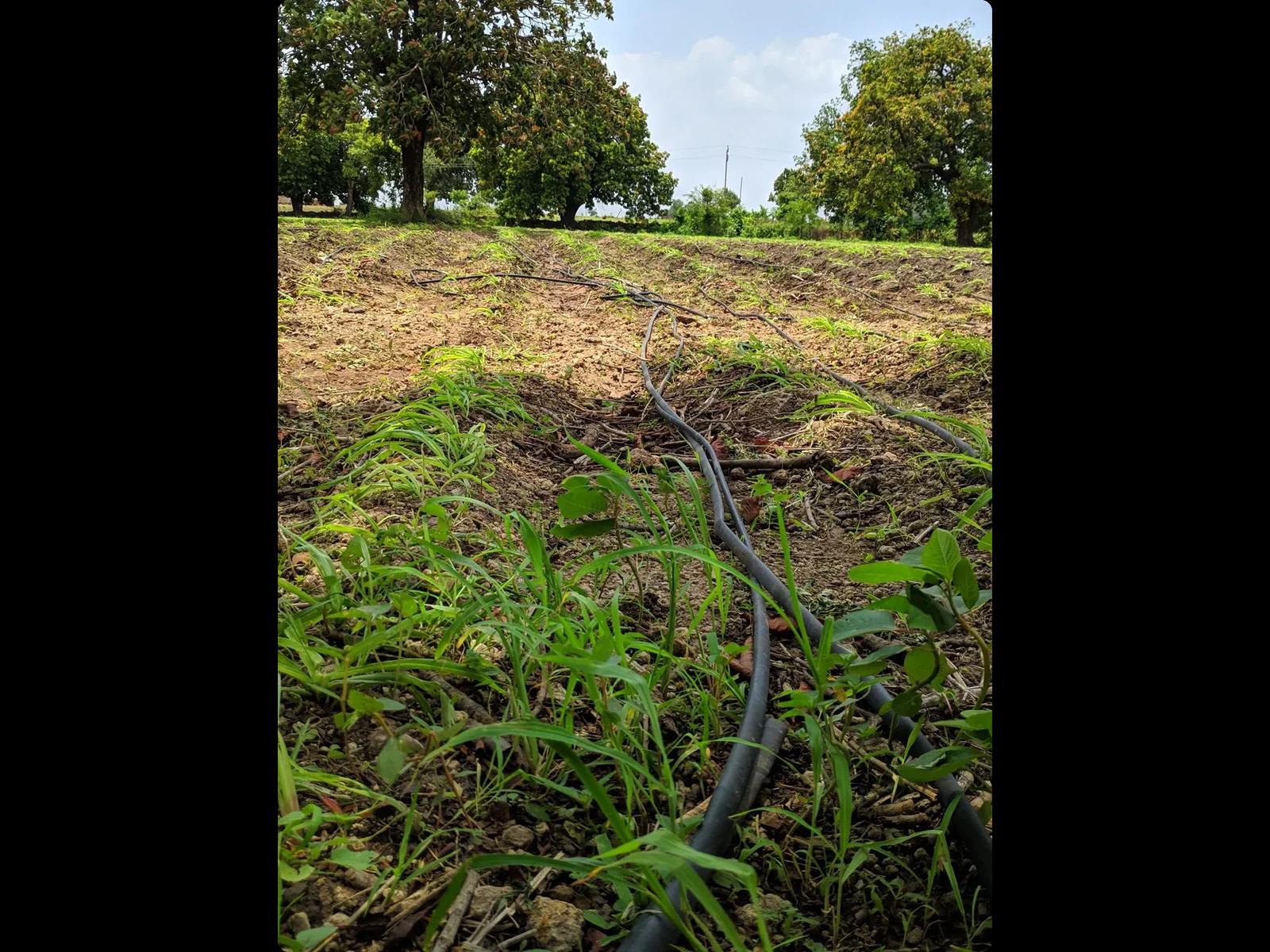
And adopting the latest technologies does not provide any guarantee of a good crop. On a different field in Rajasthan, a high-tech drip irrigation system from Israel was installed to water seeds planted three weeks before, in anticipation of rains that never arrived. With the sun heating the topsoil, the irrigation system was unable to keep the seeds cool and moist enough to survive until the eventual onset of the monsoon.
Conclusion and next steps
Of the many challenges affecting agriculture in India, the difficulty small farmers face in making a comfortable living, water scarcity, and the deterioration of soil are the most pressing. Modern technologies such as drip irrigation and advanced greenhouses are effective solutions, but there are significant barriers to implementing them at scale. Many farmers in India own extremely small plots of land, are in debt, or simply cannot afford the upfront investment required to set up and use these technologies.
Gyan Garg proposes a simpler, back-to-roots approach, with the core philosophy of making the most of what you already own. Through multi-cropping, integrated farming, and using non-traditional spaces effectively, the average farming household can diversify its income streams while raising them several times over, by his estimate, become more efficient with water, and even reduce its negative impact on soil quality.
Large challenges to adopting these practices still exist, and I propose two avenues to explore further as next steps.
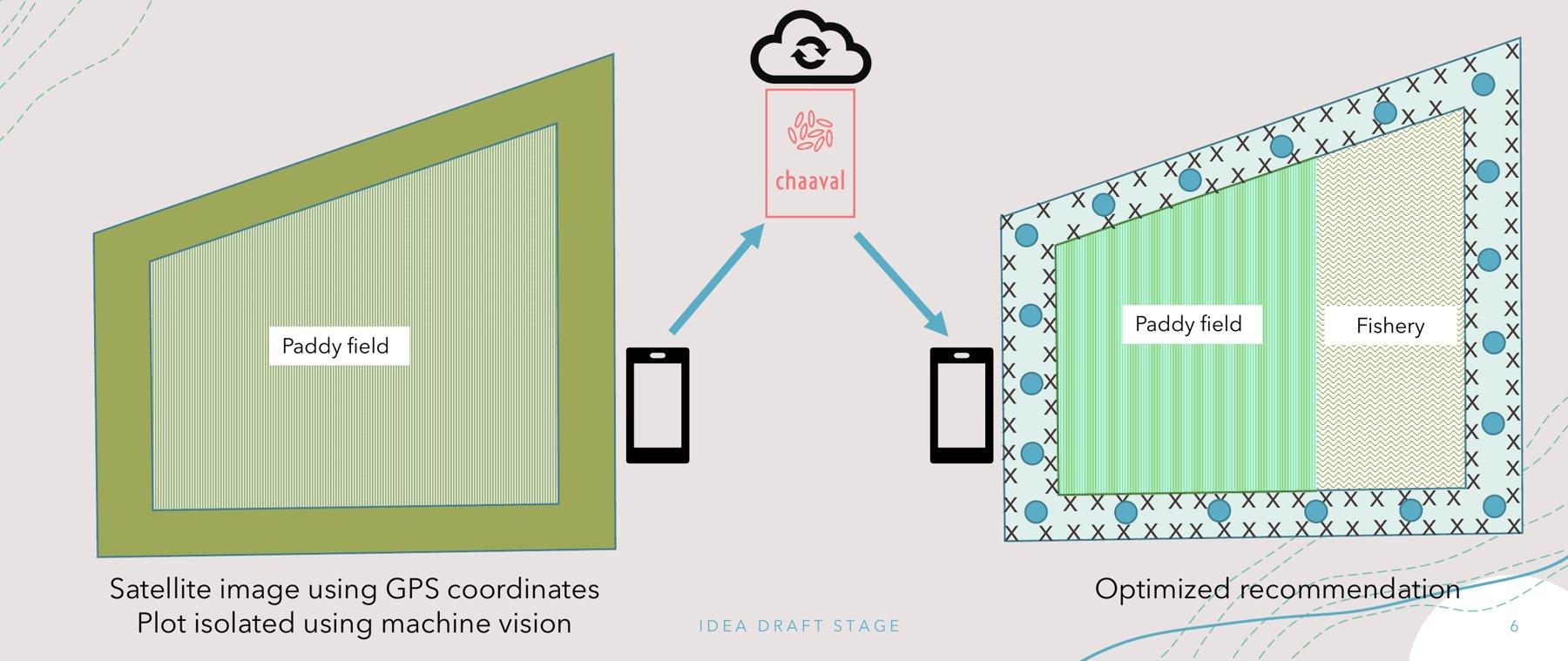
- Discover whether a solution can analyse small farm plots across the country, identify those which are inefficiently used, and present an optimised, bespoke recommendation for each plot to maximise its productive potential, considering local water and soil limitations.
- Conduct on-the-ground insights work to determine the key pain points preventing small farmers from adopting multi-cropping and integrated farming practices, and test solutions to address them.
In early 2021 I sketched the first of these as an idea, which I called Chaaval: satellite images of a plot, a recommendation for how to multi-crop it, and the seeds and saplings to do it.
Postscript, November 2026
In February 2026, India launched Bharat-VISTAAR, public digital infrastructure that gives farmers AI advice on weather, crops, pests and prices, including through a phone helpline that works on a basic feature phone. Much of what Gyan knows is now, in principle, a phone call away for the farmer on one hectare.
The dead field shows what comes next. When advice is wrong, the farmer pays for it, in seed, water and a season. So the next step is checking that the advice is right, and learning, from what actually happens on farms, which advice raises a harvest. I wrote about one way to learn that from data that already exists in a piece on Kota's tuition centres.
With thanks to Gyan Garg, for his time, his hospitality and his farms.
References
- Agriculture Census, 2015–16. Ministry of Agriculture and Farmers Welfare. Report
- Biswas, S., 2021. How Narendra Modi misread the mood of India's angry farmers. BBC News
- Dhawan, D. V., 2017. Water and Agriculture in India. OAV, German Asia-Pacific Business Association.
- Economic Survey 2021–22, Government of India, ch. 7. Page
- Garg, G., 2019. Chartered accountant, farmer, businessman. Interview, 13 July 2019.
- Gay-des-Combes, J. M. et al., 2017. Tropical soils degraded by slash-and-burn cultivation can be recultivated when amended with ashes and compost. Ecology and Evolution, 7(14), pp. 5378–5388.
- Ge, S., Zhu, Z. & Jiang, Y., 2018. Long-term impact of fertilization on soil pH and fertility in an apple production system. Journal of Soil Science and Plant Nutrition, 18(1), pp. 282–293.
- NSO, 2021. Situation Assessment of Agricultural Households, 77th round (2019), and 70th round (2013). Ministry of Statistics and Programme Implementation. PIB, Scroll
- Rani, L., 2020. COVID-19: Bihar government ends subsidy on 48 farm implements. Gulf News
- Thakur, J., 2019. Excessive fertiliser use is poisoning Yamuna river: CPCB.
- Bharat-VISTAAR: All India Radio